Dragon Kiln Heritage: Wood-Fired Traditional Vietnamese Pottery
Blue Dragon Master Craftsmen ·
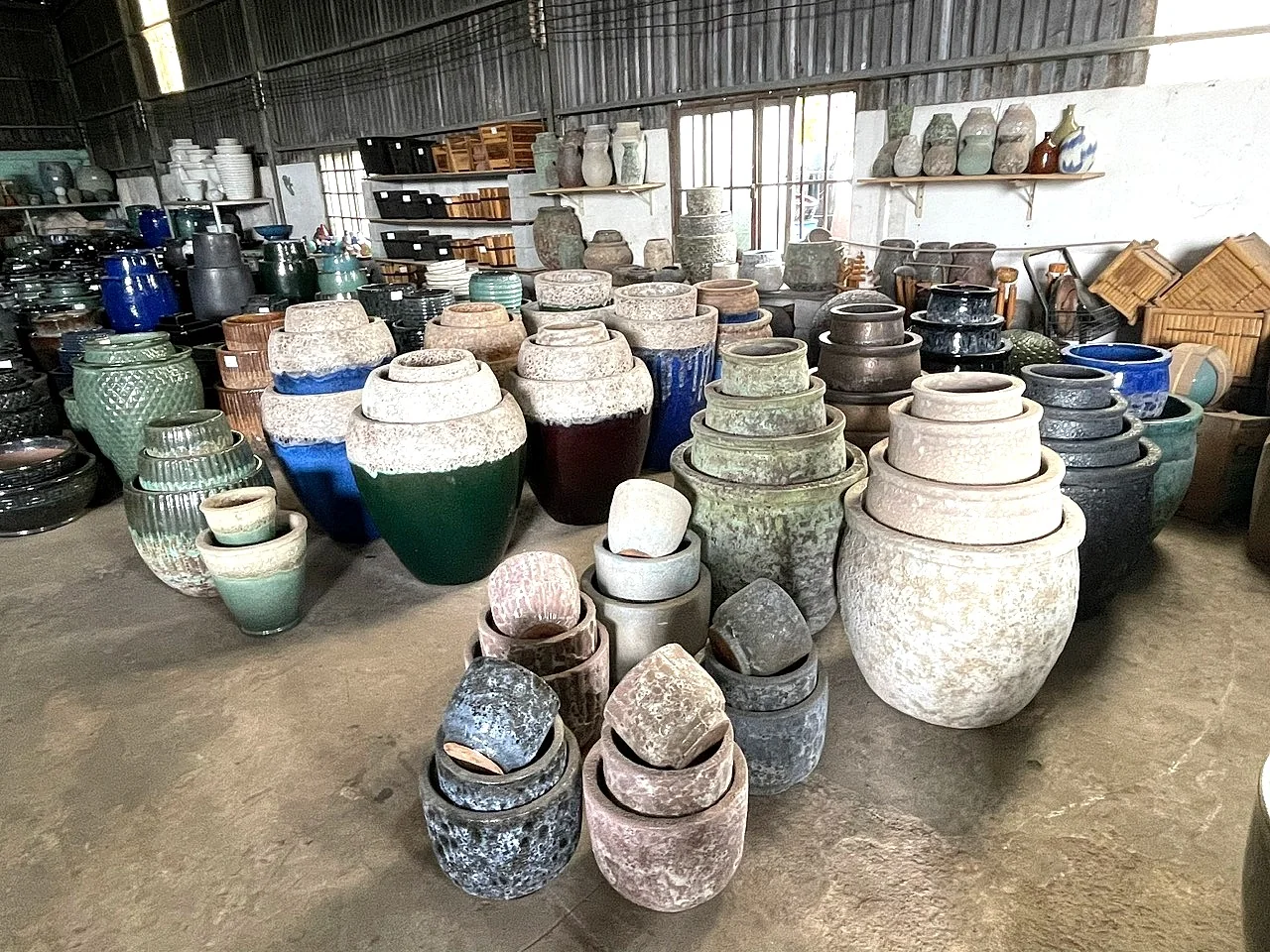
How centuries-old multi-chamber dragon kilns, eco-friendly rice-husk firing, and natural reactive glazes create frost-resistant, ancient looking ceramic planters for global architecture.
The Living Flame: Centuries of Clay, Fire, and Human Soul
Vietnam's ceramic legacy spans over a millennium, intertwining ancestral spiritual traditions with deep geological wisdom. Among the nation's crowning achievements in ceramic engineering is the legendary multi-chamber dragon kiln (Lò Rồng)—a colossal brick tunnel structure that slopes upward along natural hillside contours to harness nature's thermal updraft.
Reaching staggering internal temperatures between 1,200°C and wood kilns (2,192°F – 2,372°F), these historic kilns transform humble riverbed clay into completely vitrified, stone-hard earthenware that withstands both blazing equatorial sun and punishing sub-zero European winters.
Thermodynamics of the Sloping Dragon Kiln
Unlike modern electric or compressed gas kilns which deliver sterile, uniform heat, a traditional Vietnamese dragon kiln acts as an organic thermal organism:
- Natural Hillside Incline (15° – 20°): The ascending chamber structure acts as its own chimney flue, drawing massive convective air currents without artificial exhaust fans.
- Continuous 72-Hour Firing Cycle: Master kiln tenders (thợ đốt lò) work in continuous shifts, gauging temperatures purely through optical inspection of the incandescent flame color—transitioning from cherry red (800°C) to dazzling golden straw (1,150°C) and blinding white-hot (wood kilns).
- Fly Ash & Dynamic Reduction Atmospheres: Flying wood ash and fluctuating oxygen levels settle naturally onto unglazed clay shoulders, creating unrepeatable organic blushes and mineral flashes celebrated by landscape architects worldwide.
Eco-Conscious Biomass: Firing with Clean Wood Offcuts & Rice Husks
At Blue Dragon, honoring our heritage goes hand-in-hand with environmental stewardship. Rather than cutting virgin timber or relying on heavy industrial fossil oils, our kiln network utilizes:
- Reclaimed Carpenter Offcuts: Clean, untreated wood trimmings salvaged from certified sustainable export furniture workshops.
- Agricultural Rice Husks (Trấu): Dense agricultural byproducts sourced directly from the Mekong Delta rice mills. When burned, rice husk ash generates high silica content that enriches natural alkaline glazes with silky textural depth.
"In industrial manufacturing, variation is considered a defect. In Vietnamese artisanal pottery, subtle variations in glaze crystallites and flame licking are the irreplaceable hallmarks of authenticity that high-end homeowners and hospitality designers cherish."
Sub-Zero Frost Proofing for Global Export
One of the most critical requirements for container importers in North America, the UK, Scandinavia, and Germany is frost resistance (khả năng chịu sương giá). Standard low-fired terracotta absorbs 8% to 15% moisture, causing catastrophic cracking when winter freezes expand internal water.
Because Blue Dragon's wood-fired pottery achieves complete silica vitrification at 1,250°C+, porosity drops to under 3%, preventing water ingress and guaranteeing four-season endurance in the world's most unforgiving outdoor climates.